Showing posts with label ballet and dance. Show all posts

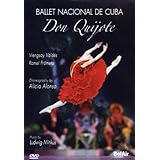
Don Quixote (2008) Review

Don Quixote (2008)
Average Reviews:

(More customer reviews)
Are you looking to buy Don Quixote (2008)? Here is the right place to find the great deals. we can offer discounts of up to 90% on Don Quixote (2008). Check out the link below:

>> Click Here to See Compare Prices and Get the Best Offers

Don Quixote (2008) ReviewThere are very few artistic accomplishments in the 20th Century to compare to the creation of the Cuban National Ballet from its beginnings to one of greatest ballet companies in the world. In Cuba, ballet is almost as popular as the national sport(baseball, followed by boxing and soccer), a situation not easily found anywhere else. All this is due to the tireless efforts of Alicia Alonso and her friends.
This performance of Don Quixote is one of the best available on DVD. It is also the first DVD we have of the Cuban National Ballet in the 21st Century. We have many examples of Cuban ballet stars dancing with other companies, like the ABT and the Royal Ballet, but not the entire company. The ballet world can only wonder where the Cuban magic comes from. Perhaps it is something in the water!
This performance, done in Paris in 2007, has fantastic choreography, artistry and technique. The costumes and sets are also beautiful. The camerawork, sound, and image are all up to the highest standards. The only thing it lacks, is the presence of the Orchestra of the Great Theatre of Havana. They recorded the music before they left for Paris. They used this pre-recorded music for the performance. Obviously, this was done to save money, since dragging the entire orchestra with them would have probably cost more than the expense for the rest of the entire ballet! The Cuban National Ballet is not exactly flush with cash. We should be glad we can see them at all.
The version of DonQ as performed here was especially created by Alicia Alonso and is a very convincing version, indeed. Choreographically modern and stimulating, it is perhaps also more faithful to the story as conceived by Cervantes. A great bonus feature is included which includes extensive interviews(in Spanish with English or French subtitles) with Alicia Alonso and the principal dancers. A wide variety of interesting topics are discussed, such as the formation of the Cuban ballet, and the basic philosophy that is part of their art and technique. Scenes of rehearsals of this and other performances are also shown. Lovers of classical ballet should try to add this to their collection. For further exploration into Cuban ballet, you might consider reading the recent biography of Carlos Acosta, "No Way Home...", as well as the biographies of Alicia Alonso.Don Quixote (2008) Overview

Want to learn more information about Don Quixote (2008)?

>> Click Here to See All Customer Reviews & Ratings Now
Read More...

Prokofiev - Cinderella / Sibley, Dowell, Royal Ballet (1969) Review

Prokofiev - Cinderella / Sibley, Dowell, Royal Ballet (1969)
Average Reviews:

(More customer reviews)
Are you looking to buy Prokofiev - Cinderella / Sibley, Dowell, Royal Ballet (1969)? Here is the right place to find the great deals. we can offer discounts of up to 90% on Prokofiev - Cinderella / Sibley, Dowell, Royal Ballet (1969). Check out the link below:

>> Click Here to See Compare Prices and Get the Best Offers

Prokofiev - Cinderella / Sibley, Dowell, Royal Ballet (1969) ReviewThis is a typical product of the forties, conservative, elegant and with a reserved sense of humour. Ashton's choreography is very classical in the sense that it's more respectful to tradition than innovative. Antoinette Sibley is a gracious dancer with a limpid technique, but I found Anthony Dowell's dancing rather cold. Frederick Ashton and Robert Helpmann are absolutely hilarious as the jealous sisters. The second act ballroom scene - where Ashton dances with a rather diminutive partner - is a jewell of integrated dance and pantomime.
The recording seems to be dated, though. The colors look faded and the sound has been poorly recorded. Also, the story has been shortened. After the ballroom scene the prince - in the original third act - travels to foreign ountries (Arabia and Spain)to find Cinderella. This act has been ommited, which is a pity for it gives an excellent opportunity for character dances.
There are four other versions of the ballet. The one choreographed by Maguy marin for the Lyon Opera Ballet is a claustrophobic and anguished piece, recommended to those who are interested in psychoanalysis and the avant-garde. Nureyev's version for the Paris Opéra Ballet has Sylvie Guillem as its main point of interest. Her partner Charles Jude has few chances to dance and Mr. Nureyev doesn't even have a dancing part. The action has been brought to the Hollywood of the twenties.
The Bolshoi version is the closest to the original. Raissa Struchkova gives a rather naive interpretation but her dancing is vigorous yet refined. This version was filmed as a feature film, not in a theater. The sense of humour is rather heavy sometimes. Sound and color are passable. The last version on video I know is of the Sevchenko Ballet from the Ukraine. In my opinion it's the most interesting. Sound and image are finely recorded and the cast, although little known - whoever heard of Alexey Ratmansky? - dances beautifully. It's quite difficult to get, as it was recorded on laser disc.Prokofiev - Cinderella / Sibley, Dowell, Royal Ballet (1969) OverviewCINDERELLA:PROKOFIEV COVENT GARDEN - DVD Movie

Want to learn more information about Prokofiev - Cinderella / Sibley, Dowell, Royal Ballet (1969)?

>> Click Here to See All Customer Reviews & Ratings Now
Read More...

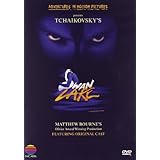
Tchaikovsky - Swan Lake (Matthew Bourne) (1998) Review

Tchaikovsky - Swan Lake (Matthew Bourne) (1998)
Average Reviews:

(More customer reviews)
Are you looking to buy Tchaikovsky - Swan Lake (Matthew Bourne) (1998)? Here is the right place to find the great deals. we can offer discounts of up to 90% on Tchaikovsky - Swan Lake (Matthew Bourne) (1998). Check out the link below:

>> Click Here to See Compare Prices and Get the Best Offers

Tchaikovsky - Swan Lake (Matthew Bourne) (1998) ReviewFinally, Matthew Bourne's innovative production of Tchaikovsky's SWAN LAKE is available on DVD. This is not a camp send-up of the balletic war horse, but a modern, freshly imagined telling of a tale of enchantment, betrayal, disenchantment, and release. What most people already know about this production is that the swans and cygnets are performed by male dancers, that the choreography emphasizes the aggressive rather than the graceful movements in swans' repertoire, and that the story is heavily freighted with Freudian implications as it shows a young prince's efforts to break free of his mother's hold (she's part Merry Widow and part Cruella deVil). The viewer who tries to analyze plot points too carefully is heading toward frustration and confusion. (For those who just can't let it alone, there's a helpful on-screen synopsis you can jump to whenever you need it.) The best way to enjoy this production is by focusing on the choreography and the dancing itself. Adam Cooper's nameless Swan is powerful, persistent, and unapologetic. He could be the prince's alter ego, his embodied desires, the id, or just about anything else you'd want to ascribe to him. He woos son and mother with equal conviction. Besides the moments when Cooper is on stage/screen, the choreographic hightlight of this production for me was the dance of the cygnets (pas de quatre). This is a moment of levity in every production of SWAN LAKE, but more so here where the mischievous antics and curiosity of the cygnets are played for all they're worth.
The other thing worth commenting on is the quality of the filming of this live performance. I have usually been disappointed by ballets on film--presentation is often static, or feet and hands get cut out of the picture, or the camera goes in for a close-up at a point when something significant is happening in the choreography. Given the trade-offs, Adventures in Motion Pictures has done an excellent job of capturing all the key choreography while creatively managing close-ups, transitions, and montages. The colors are rich and expressive (the dance of the swans by the lake is bathed in a haunting nocturnal blue). And best of all, the film is completely free of the annoying halos and bizarre shimmerings that always seem to make their way into filmed stage productions.Tchaikovsky - Swan Lake (Matthew Bourne) (1998) OverviewMatthew Bourne, director and choreographer of Adventures in Motion Pictures--a maverick new modern dance company based in London--brings a new twist to an old classic with this production of "Swan Lake." Taking advantage of the public's preoccupation with the ups and downs of the royal family, Bourne has set his story in the modern era and has cast all the swans--including the Odette/Odile role--as males. Boutne's creation brings great ballet to an audience it has never before reached, and for cognoscenti offers a new view of the breadth of possibilty in Tchaikovsky's well-loved score. "Swan Lake" enjoyed a sold-out run in London and a subsequent critically acclaimed and public-adored Broadway stint.

Want to learn more information about Tchaikovsky - Swan Lake (Matthew Bourne) (1998)?

>> Click Here to See All Customer Reviews & Ratings Now
Read More...

The Tales of Beatrix Potter (with Dancers of The Royal Ballet) Review

The Tales of Beatrix Potter (with Dancers of The Royal Ballet)
Average Reviews:

(More customer reviews)
Are you looking to buy The Tales of Beatrix Potter (with Dancers of The Royal Ballet)? Here is the right place to find the great deals. we can offer discounts of up to 90% on The Tales of Beatrix Potter (with Dancers of The Royal Ballet). Check out the link below:

>> Click Here to See Compare Prices and Get the Best Offers

The Tales of Beatrix Potter (with Dancers of The Royal Ballet) ReviewTales of Beatrix Potter with Dancers of the Royal Ballet (1971) is pure fun and innocence portrayed through top flight ballet dancing. Don't miss this production if you're a fan of ballet, Beatrix, and barnyard animals.
As the story opens, we see a young Beatrix Potter and the beautiful English countryside that was the inspiration for her family of adorable little creatures. Soon we see Beatrix's creations come to life in vignettes and costumes true to the original drawings.
The dancers appear to be dancing on an earthen stage (complete with clumps of grass, dirt, and hay), but pigs and mice on pointe were never this graceful. Watch the swine ham it up in a pigs' pas de deux, and see them escape their inevitable fate. Mr. Jeremy Fisher is one wonderfully flexible, high-jumping leapfrog. See mice go mad and perform a quick, clean petite allegro with the beautiful pointe work you'd expect from the Royal Ballet. Peter Rabbit comes in, dancing about very happily, having just raided the cabbage patch. He is witness to a picnic of rats, crashed by mice and Squirrel Nutkin and his buddies. This scene is nothing but fun and I can't imagine the dancers didn't have a blast performing it. There's even a food fight.
Don't be put off by the whimsical concept of this production. These are world-class ballet dancers performing Ashton's warm and witty, yet demanding choreography in top form.
I wish the editing had been better in spots and that the camera angles had been tighter, but I imagine it was necessary to maintain the proper perspective between the sizes of the characters and the sets. Great costumes and sets convincingly blend with footage of the real English landscape in all its green glory. Complete dancer credits at the end.The Tales of Beatrix Potter (with Dancers of The Royal Ballet) OverviewItem Name: The Tales of Beatrix Potter (with Dancers of The Royal Ballet); Studio:Starz / Anchor Bay

Want to learn more information about The Tales of Beatrix Potter (with Dancers of The Royal Ballet)?

>> Click Here to See All Customer Reviews & Ratings Now
Read More...

NOTRE DAME OF PARIS (1999) Review

NOTRE DAME OF PARIS (1999)
Average Reviews:

(More customer reviews)
Are you looking to buy NOTRE DAME OF PARIS (1999)? Here is the right place to find the great deals. we can offer discounts of up to 90% on NOTRE DAME OF PARIS (1999). Check out the link below:

>> Click Here to See Compare Prices and Get the Best Offers

NOTRE DAME OF PARIS (1999) ReviewWith the huge success of such grand musicals as LES MISERABLES and THE PHANTOM OF THE OPERA, it was perhaps obvious that sooner or later Victor Hugo's classic of love and fate, NOTRE DAME DE PARIS (AKA "The Hunchback of Notre Dame") would also get the musical treatment. Disney had already done it before as an animated film, but this time, the tragic story would be presented as a big operatic musical production. The end result would be somewhat mixed as NOTRE DAME DE PARIS became a theatrical box-office hit in both France and Canada, while underwhelming British and American audiences. (Part of this could be blamed on an English translation that proved to be both repetitive and banal.)
This DVD of NOTRE DAME DE PARIS presents the production in its original French with the option to access other language sub-titles, including English. There is also a 15 minute documentary covering the making of the musical. NOTRE DAME DE PARIS is indeed a sprawling production on a grand scale. It tells the story of the beautiful gypsy Esmeralda and of the three men who are enthralled by her: the soldier Phoebus, the priest Frollo, and Notre Dame's hunchbacked bell ringer, Quasimodo. When Esmeralda is accused of a crime which she did not commit, Quasimodo rescues and shelters her in the sanctuary of Notre Dame. However, things fall apart with tragic results.
Garou does a wonderful job of capturing the pain and humanity of Quasimodo. With his plaintive gravelly voice, his is a touching performance. Helen Segara makes for a wonderfully beautiful, if somewhat distracted, Esmeralda. Daniel Lavoie is appropriately tortured as the nasty Frollo, while Patrick Fiori is solid as the shallow Phoebus. Julie Zenatti makes the usually minor role of Pheobus' fiancée an effectively strong one, while Bruno Pelletier keeps things united as a poet/narrator. The costumes, which basically suggest the story's medieval timeframe, are only partially successful in that some of the modern touches are far too jarring for the story. The choreography also suffers since some of the numbers become far too sprawling and unfocused. There are wonderful touches throughout, however, including the sobering heart-felt finale which is true to the novel. (Something that most filmed versions of this classic tend to avoid.)
Despite its flaws, NOTRE DAME DE PARIS is definitely a show that respects its source material. As a result, it deserves attention and is definitely worth a recommendation.NOTRE DAME OF PARIS (1999) Overview

Want to learn more information about NOTRE DAME OF PARIS (1999)?

>> Click Here to See All Customer Reviews & Ratings Now
Read More...

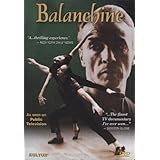
Balanchine (2004) Review

Balanchine (2004)
Average Reviews:

(More customer reviews)
Are you looking to buy Balanchine (2004)? Here is the right place to find the great deals. we can offer discounts of up to 90% on Balanchine (2004). Check out the link below:

>> Click Here to See Compare Prices and Get the Best Offers

Balanchine (2004) ReviewThis dvd, originally seen on PBS, is a great tribute to the Russian-born choreographer George Balanchine, who founded the New York City Ballet and is often creditted with bringing classical ballet to the United States. This documentary focuses almost exclusively on his professional and artistic life, and this is right and proper. There are books, as well as several documentaries ("Dancing for Mr. B," "Elusive Muse") which focus on Balanchine's complicated personal life. Here, we can just look at his great artistic creations.
There;s archival footage of so many great ballerinas and ballet dancers that were Mr. B's inspiration. Tanaquiel le Clercq (who judging from the footage may have been the most beautiful ballerina to ever step onstage), Diana Adams, Maria Tallchief, Edward Villela, Allegra Kent, Suzanne Farrell, Peter Martins, Patricia McBride ... None of the dancers are interviewed, perhaps because of time constraints. But just the footage of the dancing was enough to keep me happy. I was struck by Mr. B's diversity -- there are many clips of his ballets, and it's a testament to Mr. B's genius that I was always upset when the clips ended, because I wanted to see more.
There are also several interviews with Mr. B. His soft, gentle voice and almost childlike enthusiasm are infectious. Particularly amusing are the clips of him and Igor Stravinsky, the composer whose music whom Mr. B set so many of his best ballets (Rubies, Apollo, Agon et al.) Mr. B talks about his love of cats and cooking. So even though the documentary focuses squarely on the artistic, these interviews with Mr. B humanize him. Read the various memoirs and autobiographies for Mr. B's darker, more complex side: he was famously possessive of his ballerinas, and did not think they should have families or even personal lives apart from him. This video focuses purely on Balanchine as a creative artist.
Recently, more extensive dvd's have been released of Mr. B's complete ballets. But this documentary is still a must-see, a wonderful tribute to one of the 20th century's most prolific and remarkable artists.Balanchine (2004) Overview

Want to learn more information about Balanchine (2004)?

>> Click Here to See All Customer Reviews & Ratings Now
Read More...

Tchaikovsky - Swan Lake (1967) Review

Tchaikovsky - Swan Lake (1967)
Average Reviews:

(More customer reviews)
Are you looking to buy Tchaikovsky - Swan Lake (1967)? Here is the right place to find the great deals. we can offer discounts of up to 90% on Tchaikovsky - Swan Lake (1967). Check out the link below:

>> Click Here to See Compare Prices and Get the Best Offers

Tchaikovsky - Swan Lake (1967) ReviewRudolf Nureyev and Margot Fonteyn. No other ballet partnership is as legendary -- the fiery Russian defector and the graceful, aging English ballerina formed a bond on and off the stage that for several years practically defined romantic ballet. Thus, for this very reason, hardcore balletomanes should get this dvd. Many of us (including me) were too young to have seen Nureyev and Fonteyn live, so these videos are the only example to dissect the legendary partnership. However, caveat emptor: this is NOT a "typical" Swan Lake by any means. You can argue that there is no "typical" Swan Lake -- the original production in 1877 was a failure. Some of the music went missing. After Tchaikovksy's death, the choreographers Marius Petipa and Lev Ivanov restaged Swan Lake, and that version more or less is the Swan Lake audiences know today. There's lots of music, so most versions of Swan Lake
use the "traditional" pieces.
Nevertheless, there are some different traditions of Swan Lake. In the Russian productions, the outcome is usually "happy" -- Rothbart is killed, and Siegfried and Odette are alive. In the productions used "everywhere else," Odette and Siegfried leap into the lake, and are reunited in the otherworld. I prefer the second ending personally, because I think it better matches both the story (the happy ending was enforced by the Tsar, and seems tacked on), and the music as well.
Rudolf Nureyev's 1966 film, however, is unlike any other Swan Lake I've ever seen. First of all, from the opening closeup (of Siegfried in blue eyeshadow and red lipstick) you realize this film is not going to follow Balanchine (and classical ballet's) creed of "ballet is woman." The first act is redesigned to incorporate a lot of solos and dance opportunities for Siegfried (Nureyev). The first act usually ends with Siegfried picking up his bow and arrow and going hunting with Benno. In this film, there is a long elegiac solo for Siegfried (using music that's usually used in act 2). Since this solo has since become rather common in Swan Lake productions, it doesn't bother me that much. Actually, in this version of Swan Lake, there is no Benno, so one of the things missing from this Swan Lake is the first act Pas de Trois.
More bothersome is Act 2. Nureyev dares to tinker with the famous Act II choreography by Lev Ivanov. In the famous Odette/Siegfried Adagio, the melody is repeated with the cello, but this repeat is rather abruptly interrupted by a solo for Siegfried. Most of the famous "Love Duet" is there but I don't like the sudden switch to a solo for Siegfried. I prefer the "traditional" ending to the pas de deux.
And one also notices that Fonteyn, as graceful and lovely as she is, is at times unable to cope with the famously demanding Odette/Odile role. For instance, Odette's solo in Act II usually ends with a series of turns and then Odette stands on pointe and holds a balance before going into the wings. Fonteyn doesn't attempt the feat, but ends the series of turns in first position -- flat on her feet. Another example is Odette's entrance -- it usually is accompanied by a large grande jete. Fonteyn's jump is much smaller. Her balances are somewhat shaky. She is in general somewhat careful and slow throughout the ballet. Fonteyn also refused to have any closeups, a choice which might have hidden her wrinkles but has a distancing effect on the viewer. Fonteyn's Odette/Odile was legendary, but I don't think this video caught Fonteyn in her finest hour.
Act III's music choreography is pretty standard, but the musical arrangements (and choreography) for the Black Swan Pas de deux are different. Nureyev uses music that Tchaikovsky later composed for the Black Swan pdd, and ballet lovers will recognize it immediately as the music to Balanchine's crowdpleasing "Tchaikovsky pas de deux." Bourmeister's version of Swan Lake also uses this music. Fonteyn actually churns out the fouettes very well, confirming something I've long suspected: that everyone looks at the fouettes, but Odette/Odile's real challenges are the balances, footwork, and leaps, and this is where you can see Fonteyn suffer.
Strangely, Act IV (the act that is usually cut to shreds) is the most intact. And it's the best-danced act: it;s the reconciliation scene between Odette and Siegfried that one can catch glimmers of the genuine bond that existed between these dancers. Elsewhere, the technical limitations of Fonteyn by this time and Nureyev's reworking of Swan Lake as a solo showpiece for Siegfried distracted me from simply enjoying their partnership. I particularly loved when Siegfried runs all over the stage, turning up the head of each swan, to find his Odette, and when he finally finds Margot's head, it's a truly beautiful moment. The ending of Nureyev's version is also unorthodox, and not the "usual" endings of the Swan Boat to heaven. It is, however, in many ways very similar to the Bourmeister ending. One wonders if Nureyev got the inspiration for his ending from the Bourmeister version (which can be seen in a new video with Svetlana Zakharova and Roberto Bolle).
On a technical level, there are problems. The ballet was filmed on a soundstage, and seems way too small to fit a whole cpmpany corps. As a result, the dancers often look haplessly cramped and as if they'll bump into each other. The close bunching also detracted from the natural geometric shapes that are so much a
part of classical ballet. The Vienna State Ballet also looks woefully underreheased. Either that or they're just bad. Their legs are terribly uneven in arabesques, their arms are a mess, and they simply look like a corps that hasnt danced Swan Lake enough. The sets are also deliberately artificial and the costuming, espeically for Nureyev and in the "color" acts, is garish. The lighting is inadequate, especially in the "White Swan" acts. Rothbart (Redbeard here) is a non-dancing role, unlike in most productions when he's a smooth pimp-type in Act III.
For a traditional Swan Lake with a more modern Odette/Odile, I'd suggest the Makarova/Dowell dvd with the Royal Ballet. Makarova was 41 at the time of filming, but her long extensions, boneless arms, exquisite balances, and still impressive technique make her Odette/Odile treasurable. This Swan Lake is of great historical value, and Fonteyn is undeniably lovely, but overall I admit I wanted a more traditional Swan Lake, and I certainly wouldnt recommend this dvd as anyone's first Swan Lake. Its just too unorthodox.Tchaikovsky - Swan Lake (1967) Overview

Want to learn more information about Tchaikovsky - Swan Lake (1967)?

>> Click Here to See All Customer Reviews & Ratings Now
Read More...

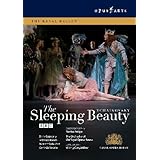
The Royal Ballet: Tchaikovsky- The Sleeping Beauty (2007) Review

The Royal Ballet: Tchaikovsky- The Sleeping Beauty (2007)
Average Reviews:

(More customer reviews)
Are you looking to buy The Royal Ballet: Tchaikovsky- The Sleeping Beauty (2007)? Here is the right place to find the great deals. we can offer discounts of up to 90% on The Royal Ballet: Tchaikovsky- The Sleeping Beauty (2007). Check out the link below:

>> Click Here to See Compare Prices and Get the Best Offers

The Royal Ballet: Tchaikovsky- The Sleeping Beauty (2007) ReviewThis release of "Sleeping Beauty," a filmed performance by the Royal Ballet, was eagerly anticipated by myself after I watched the telecast. I think, all things considered, that this is the best Sleeping Beauty DVD on the market. Other videos might have finer individual performances (Margot Fonteyn, Yuri Soloviev, Alla Sizova) but those videos are all severely abridged versions of the ballet, and the video quality is not high. This "Sleeping Beauty" has a fine cast, great video quality, and an excellent production.
I'll go over several aspects of this video:
1. The production - The Royal Ballet has always prided itself on its production of Sleeping Beauty. The famous 1946 Oliver Messel production made Margot Fonteyn an international star. Over the years, replacements for the Messel production were never very successful. In the early 1990s a production by Anthony Dowell was released on video. Viviana Durante was an excellent Aurora, but the sets and costumes were terrible and much criticized. This video is a replica of sorts of the Messel production, although the costumes have not been replicated, and the Garland Dance was choreographed by the up and coming Christopher Wheeldon. I don't like the overly pastelish, glittery costumes of the fairies, but these criticisms are mainly for the Prologue, and the sets have a grand simplicity.
2. The choreography of the Royal Ballet's production has always been its strong point. I remember an interview with the formidable Ninette di Valois when she took care to explain the difference between "production," which she says is wont to change a lot, with "choreography," which is much more constant. The Royal Ballet's choreography is was heavily based on Diaghilev's 1921 production for the Ballet Russes and Petipa assistant Sergeyev's original notations, and it preserves much of the crucial mime of the Lilac Fairy and Carabosse. Unlike Nureyev's production for the Paris Opera Ballet, the Royal Ballet's choreography has no gratuitous interpolated solos for the Prince. The famous fishdives in the Grand pas de deux that Diaghilev added to the 1921 Ballet Russes production are here as well.
3. The dancers - Alina Cojocaru in the title role gives a performance for the ages. Cojocaru is not a stereotypical ballerina. Her face makes her look eternally girlish rather than conventionally beautiful. She lacks the large eyes and high cheekbones of most ballerinas. She is extremely thin, but has short, extremely wide feet without much of an arch. Her strength is in her technique and her personality. Her feet look weak, but she is incredibly strong as a dancer. In Act 1 it's hard to expect anything more from an Aurora. Her jump is airy and light, her turns fast and secure, and she zips through the Rose Adagio with long-held balances and barely a wobble. In the Vision Scene she transforms herself effortlessly into a wispy, otherworldy creature. She has a bubbly, sweet stage presence that's apparent even in the Regal Act 3 wedding scene. Cojocaru was born in Romania and trained in the Russian style at the Kiev Ballet before she joined the Royal Ballet. Her dancing style combines the best of both worlds, having the crisp solidity usually associated with the British style along with the soft Romantic port te bras, expansiveness, and delicacy of the Russian school.
Her partner was supposed to be her offstage boyfriend Johan Kobborg, but Kobborg was injured, and Frederico Bonelli danced in his place. But the last-minute substitution is not reflected in the performance. Bonelli is princely and handsome, and he partners Cojocaru very well, especially in the Wedding grand pas de deux. They are much better matched than the tiny Viviana Durante and the extremely tall Zoltan Solymosi in the 1993 video.
Marianela Nunez is herself an acclaimed Aurora, but she gives the Lilac Fairy a sweetness and graciousness that is most welcome. This fairy is never remote, always benevolent. I agree that at times she seems a little too human, but I can't complain. Her variation in the Prologue is much superior to Benazir Hussein, in the Dowell production video.
It's a sign of the top-down quality of the video's cast that the Florine (Sarah Lamb) is also a principal dancer and acclaimed Aurora. The divertissements in Act 3 are very well-danced.
4. The video quality - very high. The sound is well balanced, the close-ups are well placed so as not to distract from the overall dancing.
Overall, Opus Arte has released yet another treasurable video from the Royal Ballet. (Fille Mal Gardee and Sylvia are also highly recommended.)The Royal Ballet: Tchaikovsky- The Sleeping Beauty (2007) OverviewThe Sleeping Beauty has been performed at many key moments in the Royal Ballet's history.To coincide with the Company's 75th Anniversary, Monica Mason and Christopher Newton created a new production based on theSergeyev/De Valois/Messel production that was first performed by the company in 1946.Peter Farmer recreated and augmented Oliver Messel's designs adn Christopher Wheeldon choreographed a new Garland Dance for this production.

Want to learn more information about The Royal Ballet: Tchaikovsky- The Sleeping Beauty (2007)?

>> Click Here to See All Customer Reviews & Ratings Now
Read More...

Tchaikovsky - Swan Lake / American Ballet Theatre, Murphy, Corella (2005) Review

Tchaikovsky - Swan Lake / American Ballet Theatre, Murphy, Corella (2005)
Average Reviews:

(More customer reviews)
Are you looking to buy Tchaikovsky - Swan Lake / American Ballet Theatre, Murphy, Corella (2005)? Here is the right place to find the great deals. we can offer discounts of up to 90% on Tchaikovsky - Swan Lake / American Ballet Theatre, Murphy, Corella (2005). Check out the link below:

>> Click Here to See Compare Prices and Get the Best Offers

Tchaikovsky - Swan Lake / American Ballet Theatre, Murphy, Corella (2005) ReviewAmerican Ballet Theatre's Swan Lake, as presented on PBS' Dance in America series, is a must-have for any serious ballet lover. The settings & costumes are fresh and new. The age-old story of love, betrayal, and redemption is set to Tchaikovsky's lush score with some new music and a new scene. Of course the cornerstone of any ballet is the dancing. Gillian Murphy is absolutely remarkable as Odette/Odile, soft and vulnerable as the Swan Queen in acts 2 & 4 and hard, brilliant, dazzling as Odile in act 3. Angel Corella's Prince Siegfried is a perfect match for her. He is a brilliant dancer and a good actor, although I would have liked to have seen what Ethan Stiefel could have done with the part. The chemistry between Murphy & Corella is palpable. However, I have an old VHS of Swan Lake with Natalia Markova & Ivan Nagy, and I must say there has never in my opinion been a danseur noble to compare with Nagy. He was Siegfried incarnate.
Herman Cornejo also shines in the small role of Benno, Siegfried's friend, and he and the two female dancers (whose names I confess I don't know) make the first act trio a joy to watch. Georgina Parkinson is just right as the queen mother, stern yet loving. Victor Barbee is wasted in the small role of the master of ceremonies. In his younger days, he was an outstanding Rothbart.
One very unexpected pleasure in this ballet was Marcelo Gomes, who did such a fine job in Le Corsair as the villainous pirate, as the human Rothbart. He was wisely given a dance with the four princesses in which he is so handsome and seductive that they are putty in his hands--and he has an effect on the queen as well! I give him a standing ovation. Brilliant!
Rothbart's dance and a prologue in which we see him seduce the human Odette are two welcome additions, although I wish the prologue had been a little longer.
I have two minor complaints. First of all, the princesses were generically costumed. None of them had an of the flavor of their native countries in their dress. This is, however, not really important, just something I noticed.
Secondly, however, I saw no need to have another dancer as the demon Rothbart complete with green skin and huge, curving horns. One Rothbarth would have been perfect; two is a joke.
I strongly recommend this DVD to any lover of Swan Lake. It's one you'll treasure.Tchaikovsky - Swan Lake / American Ballet Theatre, Murphy, Corella (2005) Overview

Want to learn more information about Tchaikovsky - Swan Lake / American Ballet Theatre, Murphy, Corella (2005)?

>> Click Here to See All Customer Reviews & Ratings Now
Read More...