Average Reviews:

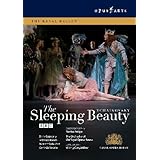
(More customer reviews)Are you looking to buy The Royal Ballet: Tchaikovsky- The Sleeping Beauty (2007)? Here is the right place to find the great deals. we can offer discounts of up to 90% on The Royal Ballet: Tchaikovsky- The Sleeping Beauty (2007). Check out the link below:
>> Click Here to See Compare Prices and Get the Best Offers
The Royal Ballet: Tchaikovsky- The Sleeping Beauty (2007) ReviewThis release of "Sleeping Beauty," a filmed performance by the Royal Ballet, was eagerly anticipated by myself after I watched the telecast. I think, all things considered, that this is the best Sleeping Beauty DVD on the market. Other videos might have finer individual performances (Margot Fonteyn, Yuri Soloviev, Alla Sizova) but those videos are all severely abridged versions of the ballet, and the video quality is not high. This "Sleeping Beauty" has a fine cast, great video quality, and an excellent production.I'll go over several aspects of this video:
1. The production - The Royal Ballet has always prided itself on its production of Sleeping Beauty. The famous 1946 Oliver Messel production made Margot Fonteyn an international star. Over the years, replacements for the Messel production were never very successful. In the early 1990s a production by Anthony Dowell was released on video. Viviana Durante was an excellent Aurora, but the sets and costumes were terrible and much criticized. This video is a replica of sorts of the Messel production, although the costumes have not been replicated, and the Garland Dance was choreographed by the up and coming Christopher Wheeldon. I don't like the overly pastelish, glittery costumes of the fairies, but these criticisms are mainly for the Prologue, and the sets have a grand simplicity.
2. The choreography of the Royal Ballet's production has always been its strong point. I remember an interview with the formidable Ninette di Valois when she took care to explain the difference between "production," which she says is wont to change a lot, with "choreography," which is much more constant. The Royal Ballet's choreography is was heavily based on Diaghilev's 1921 production for the Ballet Russes and Petipa assistant Sergeyev's original notations, and it preserves much of the crucial mime of the Lilac Fairy and Carabosse. Unlike Nureyev's production for the Paris Opera Ballet, the Royal Ballet's choreography has no gratuitous interpolated solos for the Prince. The famous fishdives in the Grand pas de deux that Diaghilev added to the 1921 Ballet Russes production are here as well.
3. The dancers - Alina Cojocaru in the title role gives a performance for the ages. Cojocaru is not a stereotypical ballerina. Her face makes her look eternally girlish rather than conventionally beautiful. She lacks the large eyes and high cheekbones of most ballerinas. She is extremely thin, but has short, extremely wide feet without much of an arch. Her strength is in her technique and her personality. Her feet look weak, but she is incredibly strong as a dancer. In Act 1 it's hard to expect anything more from an Aurora. Her jump is airy and light, her turns fast and secure, and she zips through the Rose Adagio with long-held balances and barely a wobble. In the Vision Scene she transforms herself effortlessly into a wispy, otherworldy creature. She has a bubbly, sweet stage presence that's apparent even in the Regal Act 3 wedding scene. Cojocaru was born in Romania and trained in the Russian style at the Kiev Ballet before she joined the Royal Ballet. Her dancing style combines the best of both worlds, having the crisp solidity usually associated with the British style along with the soft Romantic port te bras, expansiveness, and delicacy of the Russian school.
Her partner was supposed to be her offstage boyfriend Johan Kobborg, but Kobborg was injured, and Frederico Bonelli danced in his place. But the last-minute substitution is not reflected in the performance. Bonelli is princely and handsome, and he partners Cojocaru very well, especially in the Wedding grand pas de deux. They are much better matched than the tiny Viviana Durante and the extremely tall Zoltan Solymosi in the 1993 video.
Marianela Nunez is herself an acclaimed Aurora, but she gives the Lilac Fairy a sweetness and graciousness that is most welcome. This fairy is never remote, always benevolent. I agree that at times she seems a little too human, but I can't complain. Her variation in the Prologue is much superior to Benazir Hussein, in the Dowell production video.
It's a sign of the top-down quality of the video's cast that the Florine (Sarah Lamb) is also a principal dancer and acclaimed Aurora. The divertissements in Act 3 are very well-danced.
4. The video quality - very high. The sound is well balanced, the close-ups are well placed so as not to distract from the overall dancing.
Overall, Opus Arte has released yet another treasurable video from the Royal Ballet. (Fille Mal Gardee and Sylvia are also highly recommended.)The Royal Ballet: Tchaikovsky- The Sleeping Beauty (2007) OverviewThe Sleeping Beauty has been performed at many key moments in the Royal Ballet's history.To coincide with the Company's 75th Anniversary, Monica Mason and Christopher Newton created a new production based on theSergeyev/De Valois/Messel production that was first performed by the company in 1946.Peter Farmer recreated and augmented Oliver Messel's designs adn Christopher Wheeldon choreographed a new Garland Dance for this production.
Want to learn more information about The Royal Ballet: Tchaikovsky- The Sleeping Beauty (2007)?
>> Click Here to See All Customer Reviews & Ratings Now

0 comments:
Post a Comment