Showing posts with label deutsche grammophon music. Show all posts

J.S. Bach/Miklos Perenyi: 6 Suites for Cello Solo - BWV 1007-1012 (2006) Review

J.S. Bach/Miklos Perenyi: 6 Suites for Cello Solo - BWV 1007-1012 (2006)
Average Reviews:

(More customer reviews)
Are you looking to buy J.S. Bach/Miklos Perenyi: 6 Suites for Cello Solo - BWV 1007-1012 (2006)? Here is the right place to find the great deals. we can offer discounts of up to 90% on J.S. Bach/Miklos Perenyi: 6 Suites for Cello Solo - BWV 1007-1012 (2006). Check out the link below:

>> Click Here to See Compare Prices and Get the Best Offers

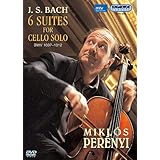
J.S. Bach/Miklos Perenyi: 6 Suites for Cello Solo - BWV 1007-1012 (2006) ReviewMr. Perenyi, of whom I had never previously heard, conveys a deep understanding of the structure and musicality of Bach's great suites. Although Mr. Perenyi displays awesome technique -- his intonation, sound, and bowing are amazing -- his skills are employed solely to further the music, and never merely for show. This allows Bach's music to shine with brilliant corners.
Mr. Perenyi's mastery of these suites is astounding (he plays them without sheet music -- often with his eyes closed) and his penchant for clarity and form expose much of what is essential about Bach.
The camera work -- the camera rotates around Mr. Perenyi -- is interesting without being distracting, and allows varied yet focused views of the cellist. Unlike the Rostropovich Bach cello suites DVD, the camera is always focused on the cellist. Also unlike the Rostropovich, the camera is a proper distance from the cellist. The sound, too, is better than the Rostropovich DVD. You see, hear, and feel Bach all around.
Mr. Perenyi eschews romanticisms. His cello playing on this DVD is exceptionally precise, articulate, and relaxed. Whether this will enhance the poetry of the suites for you -- as it did for me -- is up to you to decide.J.S. Bach/Miklos Perenyi: 6 Suites for Cello Solo - BWV 1007-1012 (2006) Overview

Want to learn more information about J.S. Bach/Miklos Perenyi: 6 Suites for Cello Solo - BWV 1007-1012 (2006)?

>> Click Here to See All Customer Reviews & Ratings Now
Read More...

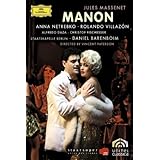
Jules Massenet: Manon (2008) Review

Jules Massenet: Manon (2008)
Average Reviews:

(More customer reviews)
Are you looking to buy Jules Massenet: Manon (2008)? Here is the right place to find the great deals. we can offer discounts of up to 90% on Jules Massenet: Manon (2008). Check out the link below:

>> Click Here to See Compare Prices and Get the Best Offers

Jules Massenet: Manon (2008) ReviewThe theatricality of this life performance of Manon on DVD is amazing. Paterson's idea to update Manon into the 50s is the creation of a genius with so many metaphors and symbolism. Like many sixteen-year-old girls, Manon dreams of becoming a movie star for fame, prosperity and the "good" life. The presence of cameras on stage from the beginning gives a physical glimpse of her dreams. And every bobby soxer dreams of the day she'll put on sheer hosiery with the sexy seam in the back. The black magic-marker line Manon inscribes on the back of her nude sexy leg is a raw manifestation of her subconscious desire that Paterson captures to
perfection.
What about the music? After all, Manon is an opera. Personally, Manon is not one of my favorite operas. The first two acts, musically speaking, are rather tedious and tenuous. The heavy dramatic singing picks up later and if it's well sung, it makes Manon a heavyweight and a tearjerker. Netrebko's Manon, with the help of Paterson's intelligent direction,
projects the character's flaws, immaturity and shallowness with honesty that makes you feel sorry for her. And her singing? Netrebko's in total command with unbelievable either playful or dramatic color. And her death scene in the end is destined for prosperity. Netrebko not only sings and acts well but she even dies better!
Villazon is in excellent form with secure top but he appears to be a liitle cautious with the size of his sound. He and Netrebko make the "dream team" one more time, as this production shows; and this DVD is highly recommended. The sound of the orchestra is underpowered at times, maybe due to a little sluggishness from the podium.
Constantine A. Papas
El Paso, TexasJules Massenet: Manon (2008) Overview

Want to learn more information about Jules Massenet: Manon (2008)?

>> Click Here to See All Customer Reviews & Ratings Now
Read More...

Puccini - Madama Butterfly (1974) Review

Puccini - Madama Butterfly (1974)
Average Reviews:

(More customer reviews)
Are you looking to buy Puccini - Madama Butterfly (1974)? Here is the right place to find the great deals. we can offer discounts of up to 90% on Puccini - Madama Butterfly (1974). Check out the link below:

>> Click Here to See Compare Prices and Get the Best Offers

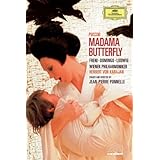
Puccini - Madama Butterfly (1974) ReviewThis supposedly new release from Deutsche Grammophon is actually the same 1974 production previously released under the Decca label in 2001. That older title is still available at Amazon. This is a film version, not a stage production. It was directed by Jean-Pierre Ponnelle and starred some of the finest performers available at the time. The great Herbert von Karajan conducts the Vienna Philharmonic Orchestra and Vienna State Opera. It is without question a magnificient performance. Mirella Freni sings the role of Butterfly as few others can match. Placido Domingo is in equally fine form. Christa Ludwig is excellent as Suzuki. And yet the film as a whole doesn't really work. The trouble is that while Ponnelle tries to make this into a movie version of Butterfly, he neither has the resources nor the capability for doing so. The staging looks decidedly cheap, lacklustre and as some have commented, tacky. An effective movie version would benefit from realistic settings, a real house on a hill, with a sparkling Bay beneath. It could have done without some of the sensationalist/ridiculous set directions, like having Domingo jump out through the paper walls of the house, ostensibly for dramatic effect. This production could have worked (indeed would have been a triumphant success) if filmed purely as a stage based opera. However Ponnelle's final choice puts it neither here nor there. We have sets that look like they belong on stage (and not a very good stage at that), yet the performers are made to act as if they were in a movie. We get to see Placido Domingo chewing gum while he contemplates marrying Cio Cio San, presumably to show what a cad he is. And he continues to chew gum even while he's supposed to be singing. While this is still set in 19th century Japan, Domingo is seen to wear an obviously 20th century T-shirt. Domingo can act far better than what is shown here. As for the singing, the performances are all dubbed post-production. Lip synching ranges from poor to laughable. Because this is supposed to be a movie, and not a staged opera, we get the truly unbelieveable sight of these great performers singing without having to open their mouths - as we are supposed to be hearing their thoughts. Again, this could work provided the director is able to convince the audience that they are in a realistic film world. Unfortunately we are never transported into that world, we are all too aware that this is an opera sung on stage, albeit lip-synched.
The original Decca DVD sported a very soft, grainy transfer in fullscreen (pan & scan), littered with dirt specks and film nicks, looking very much like a poor quality VHS tape and this DG reissue looks no different. I can do without the DTS remix. This was recorded in stereo and the original release, in addition to a Dolby 5.0 surround, already had an excellent uncompressed Linear PCM audio track with quality equivalent to that of a good CD.
The original Decca release received mixed reviews. Aurally it is superb, one of the finest Butterflies ever. Visually it is close to a disaster. If you believe opera is only meant to be listened to, then this will be a top choice. If you believe opera should be an experience for both the eyes and ears, then pass this by. Even today, I still play the old Decca DVD, but only to listen to. I leave the TV off.Note: It's not strictly correct to say that the singers were dubbed post-production. This movie has a curious history. It began as an audio-only studio recording with the exact same cast except that Luciano Pavarotti sang the role of Pinkerton. That recording was made in early 1974 at the Sofiensaal in Vienna. It received critical acclaim. The decision to make a movie using that original recording as a soundtrack came later that year. For the movie, they re-recorded Placido Domingo in the role as Pinkerton and spliced it into the earlier recording of the original cast. So the performers are in fact miming or lip-synching to the pre-recorded music while the film was being shot.Puccini - Madama Butterfly (1974) OverviewPUCCINI:MADAMA BUTTERFLY - DVD Movie

Want to learn more information about Puccini - Madama Butterfly (1974)?

>> Click Here to See All Customer Reviews & Ratings Now
Read More...

Tchaikovsky - Swan Lake (1967) Review

Tchaikovsky - Swan Lake (1967)
Average Reviews:

(More customer reviews)
Are you looking to buy Tchaikovsky - Swan Lake (1967)? Here is the right place to find the great deals. we can offer discounts of up to 90% on Tchaikovsky - Swan Lake (1967). Check out the link below:

>> Click Here to See Compare Prices and Get the Best Offers

Tchaikovsky - Swan Lake (1967) ReviewRudolf Nureyev and Margot Fonteyn. No other ballet partnership is as legendary -- the fiery Russian defector and the graceful, aging English ballerina formed a bond on and off the stage that for several years practically defined romantic ballet. Thus, for this very reason, hardcore balletomanes should get this dvd. Many of us (including me) were too young to have seen Nureyev and Fonteyn live, so these videos are the only example to dissect the legendary partnership. However, caveat emptor: this is NOT a "typical" Swan Lake by any means. You can argue that there is no "typical" Swan Lake -- the original production in 1877 was a failure. Some of the music went missing. After Tchaikovksy's death, the choreographers Marius Petipa and Lev Ivanov restaged Swan Lake, and that version more or less is the Swan Lake audiences know today. There's lots of music, so most versions of Swan Lake
use the "traditional" pieces.
Nevertheless, there are some different traditions of Swan Lake. In the Russian productions, the outcome is usually "happy" -- Rothbart is killed, and Siegfried and Odette are alive. In the productions used "everywhere else," Odette and Siegfried leap into the lake, and are reunited in the otherworld. I prefer the second ending personally, because I think it better matches both the story (the happy ending was enforced by the Tsar, and seems tacked on), and the music as well.
Rudolf Nureyev's 1966 film, however, is unlike any other Swan Lake I've ever seen. First of all, from the opening closeup (of Siegfried in blue eyeshadow and red lipstick) you realize this film is not going to follow Balanchine (and classical ballet's) creed of "ballet is woman." The first act is redesigned to incorporate a lot of solos and dance opportunities for Siegfried (Nureyev). The first act usually ends with Siegfried picking up his bow and arrow and going hunting with Benno. In this film, there is a long elegiac solo for Siegfried (using music that's usually used in act 2). Since this solo has since become rather common in Swan Lake productions, it doesn't bother me that much. Actually, in this version of Swan Lake, there is no Benno, so one of the things missing from this Swan Lake is the first act Pas de Trois.
More bothersome is Act 2. Nureyev dares to tinker with the famous Act II choreography by Lev Ivanov. In the famous Odette/Siegfried Adagio, the melody is repeated with the cello, but this repeat is rather abruptly interrupted by a solo for Siegfried. Most of the famous "Love Duet" is there but I don't like the sudden switch to a solo for Siegfried. I prefer the "traditional" ending to the pas de deux.
And one also notices that Fonteyn, as graceful and lovely as she is, is at times unable to cope with the famously demanding Odette/Odile role. For instance, Odette's solo in Act II usually ends with a series of turns and then Odette stands on pointe and holds a balance before going into the wings. Fonteyn doesn't attempt the feat, but ends the series of turns in first position -- flat on her feet. Another example is Odette's entrance -- it usually is accompanied by a large grande jete. Fonteyn's jump is much smaller. Her balances are somewhat shaky. She is in general somewhat careful and slow throughout the ballet. Fonteyn also refused to have any closeups, a choice which might have hidden her wrinkles but has a distancing effect on the viewer. Fonteyn's Odette/Odile was legendary, but I don't think this video caught Fonteyn in her finest hour.
Act III's music choreography is pretty standard, but the musical arrangements (and choreography) for the Black Swan Pas de deux are different. Nureyev uses music that Tchaikovsky later composed for the Black Swan pdd, and ballet lovers will recognize it immediately as the music to Balanchine's crowdpleasing "Tchaikovsky pas de deux." Bourmeister's version of Swan Lake also uses this music. Fonteyn actually churns out the fouettes very well, confirming something I've long suspected: that everyone looks at the fouettes, but Odette/Odile's real challenges are the balances, footwork, and leaps, and this is where you can see Fonteyn suffer.
Strangely, Act IV (the act that is usually cut to shreds) is the most intact. And it's the best-danced act: it;s the reconciliation scene between Odette and Siegfried that one can catch glimmers of the genuine bond that existed between these dancers. Elsewhere, the technical limitations of Fonteyn by this time and Nureyev's reworking of Swan Lake as a solo showpiece for Siegfried distracted me from simply enjoying their partnership. I particularly loved when Siegfried runs all over the stage, turning up the head of each swan, to find his Odette, and when he finally finds Margot's head, it's a truly beautiful moment. The ending of Nureyev's version is also unorthodox, and not the "usual" endings of the Swan Boat to heaven. It is, however, in many ways very similar to the Bourmeister ending. One wonders if Nureyev got the inspiration for his ending from the Bourmeister version (which can be seen in a new video with Svetlana Zakharova and Roberto Bolle).
On a technical level, there are problems. The ballet was filmed on a soundstage, and seems way too small to fit a whole cpmpany corps. As a result, the dancers often look haplessly cramped and as if they'll bump into each other. The close bunching also detracted from the natural geometric shapes that are so much a
part of classical ballet. The Vienna State Ballet also looks woefully underreheased. Either that or they're just bad. Their legs are terribly uneven in arabesques, their arms are a mess, and they simply look like a corps that hasnt danced Swan Lake enough. The sets are also deliberately artificial and the costuming, espeically for Nureyev and in the "color" acts, is garish. The lighting is inadequate, especially in the "White Swan" acts. Rothbart (Redbeard here) is a non-dancing role, unlike in most productions when he's a smooth pimp-type in Act III.
For a traditional Swan Lake with a more modern Odette/Odile, I'd suggest the Makarova/Dowell dvd with the Royal Ballet. Makarova was 41 at the time of filming, but her long extensions, boneless arms, exquisite balances, and still impressive technique make her Odette/Odile treasurable. This Swan Lake is of great historical value, and Fonteyn is undeniably lovely, but overall I admit I wanted a more traditional Swan Lake, and I certainly wouldnt recommend this dvd as anyone's first Swan Lake. Its just too unorthodox.Tchaikovsky - Swan Lake (1967) Overview

Want to learn more information about Tchaikovsky - Swan Lake (1967)?

>> Click Here to See All Customer Reviews & Ratings Now
Read More...

Verdi - Aida / Levine, Domingo, Millo, Metropolitan Opera (1989) Review

Verdi - Aida / Levine, Domingo, Millo, Metropolitan Opera (1989)
Average Reviews:

(More customer reviews)
Are you looking to buy Verdi - Aida / Levine, Domingo, Millo, Metropolitan Opera (1989)? Here is the right place to find the great deals. we can offer discounts of up to 90% on Verdi - Aida / Levine, Domingo, Millo, Metropolitan Opera (1989). Check out the link below:

>> Click Here to See Compare Prices and Get the Best Offers

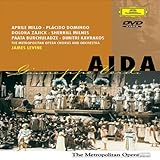
Verdi - Aida / Levine, Domingo, Millo, Metropolitan Opera (1989) ReviewThis 1989 Metropolitan production conducted by James Levine is visually stunning with its massive sets by Gianni Quaranta, in a palette of cream, gold and brown.
Domingo's Rhadames is robust and masculine, and his performance is well acted and heartfelt, and Aprile Millo, beautiful in ebon makeup and with her marvelous profile, looks every inch the Ethiopian princess taken slave; her sound is rich, full of emotion, and with wonderful pianissimos. For me, her "O patria mia" is the highlight of this opera, and she shines in every scene she is in.
I have a special fondness for Act One, Scene two, the "Temple of Vulcan", with "Nume, custode e vindice" one of the loveliest of the opera's melodies. Here it gets a stately treatment, and though it does not come close to the musical power of the Domingo/Ghiaurov/Muti CD, it is still good listening. Act Two, Scene Two, the Victory March, has some well behaved horses, a simple but pleasant ballet choreographed by Rodney Griffin with attractive dancers, and the entrance of the great Sherrill Milnes. Though well past his prime vocally, he looks fabulous, and is believable as the conquered King Amonasro. The cast is rounded out by Dolora Zajick as Amneris, Dimitri Kavrakos as the Egyptian King, and Paata Burchuladze as Ramfis.
Though the stage direction is on occasion a little static, and the singing not always quite up to par, this is one of Verdi's grandest operas, and makes for very enjoyable viewing, and every minute spent with Aprile, is time well spent.
The subtitles are legible and helpful, and it comes with a small booklet with the synopsis in English and French; total running time is 158 minutes.Verdi - Aida / Levine, Domingo, Millo, Metropolitan Opera (1989) Overview

Want to learn more information about Verdi - Aida / Levine, Domingo, Millo, Metropolitan Opera (1989)?

>> Click Here to See All Customer Reviews & Ratings Now
Read More...