Showing posts with label piano. Show all posts

Close to Silence Review

Close to Silence
Average Reviews:

(More customer reviews)
Are you looking to buy Close to Silence? Here is the right place to find the great deals. we can offer discounts of up to 90% on Close to Silence. Check out the link below:

>> Click Here to See Compare Prices and Get the Best Offers

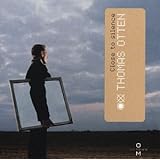
Close to Silence ReviewHere is a young man with a beautiful counter-tenor voice that will overwhelm you when you hear him. I just can't stop playing this CD. It's not really new age,or ethnic music, but it does sound a little South African. Sometimes it reminds me of "Enigma" or "B Tribe." But the point is its great to relax to, or even use as meditation background. My two favorite tracks are; "Dulciate" and "Sanza."
Now I only wish Thomas Otten would team-up with that other great counter-tenor, "Vyatcheslav Kagan-Paley" (who recently put out a CD title, "Ave Maria", 12 different versions) and then we would have one glorious and beautiful duo of breathtaking vocals. I look forward to Thomas Otten's next release.Close to Silence Overview

Want to learn more information about Close to Silence?

>> Click Here to See All Customer Reviews & Ratings Now
Read More...

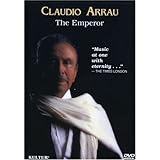
Claudio Arrau: The Emperor Review

Claudio Arrau: The Emperor
Average Reviews:

(More customer reviews)
Are you looking to buy Claudio Arrau: The Emperor? Here is the right place to find the great deals. we can offer discounts of up to 90% on Claudio Arrau: The Emperor. Check out the link below:

>> Click Here to See Compare Prices and Get the Best Offers

Claudio Arrau: The Emperor ReviewWhile it is a pleasure to have another Arrau performance of Beethoven's 5th piano concerto, the presentation is disappointing. First of all there are about 40 minutes introduction, with a montage of interviews, rehearsals and so on, with a devastating commentary. Afterwards you get a hum-drum performance with a rather mediocre orchestra, tiny sound and not much of a concept. But what is really annoying about this disc? Well, there's a gap between sound and image, a gap of less than a second, to be sure, but enough for a distraction from the presentation. Finally I chose to switch off my tv and preferred to listen only.Claudio Arrau: The Emperor Overview

Want to learn more information about Claudio Arrau: The Emperor?

>> Click Here to See All Customer Reviews & Ratings Now
Read More...

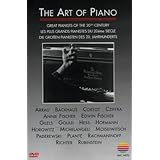
The Art of Piano - Great Pianists of 20th Century (1999) Review

The Art of Piano - Great Pianists of 20th Century (1999)
Average Reviews:

(More customer reviews)
Are you looking to buy The Art of Piano - Great Pianists of 20th Century (1999)? Here is the right place to find the great deals. we can offer discounts of up to 90% on The Art of Piano - Great Pianists of 20th Century (1999). Check out the link below:

>> Click Here to See Compare Prices and Get the Best Offers

The Art of Piano - Great Pianists of 20th Century (1999) ReviewHaving owned the videotape of this program I was pleased to get the new DVD version. It has additions to the tape. For one thing, although conducted primarily in English, there are English subtitles for those bits that are conducted in languages other than English. And there are also Japanese, Spanish and French subtitles for those who wish them. Some of the film footage is simply magnificent and extremely rare. For instance, one sees the elderly Francis Plante playing brilliantly; born in 1839, he had actually heard Chopin play! There is some tendency to cut away from music footage in order to continue the voice-over narration, and that is understandable, but it is also occasionally frustrating. Some have complained that there are only two female pianists represented - a long and impressive bit with Dame Myra Hess, and an uncredited bit underneath the credits with Annie Fischer - but then there are plenty of other male pianists who could have been included, too. The makers of the film only had two hours with which to work, so one can understand the omissions. There is a minimum of fawning, a fair amount of substantive information - both plusses. For those of us who are fascinated by both piano technique and ever-changing pianistic styles this DVD is indispensable. It was wonderful to see lengthy bits featuring, among others, Benno Moiseiwitsch, Josef Hofmann, Claudio Arrau, Emil Gilels, Sviatoslav Richter, Arturo Benedetto Michelangeli, György Cziffra, Alfred Cortot, Arthur Rubinstein and to have interviews with current musicians like Sir Colin Davis, Stephen Kovacevich, Daniel Barenboim, Piotr Anderszewski, Tamás Vasáry, and Gary Graffman.
Recommended.
Scott MorrisonThe Art of Piano - Great Pianists of 20th Century (1999) Overview

Want to learn more information about The Art of Piano - Great Pianists of 20th Century (1999)?

>> Click Here to See All Customer Reviews & Ratings Now
Read More...

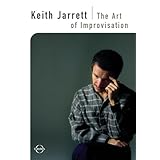
Keith Jarrett - Art of Improvisation Review

Keith Jarrett - Art of Improvisation
Average Reviews:

(More customer reviews)
Are you looking to buy Keith Jarrett - Art of Improvisation? Here is the right place to find the great deals. we can offer discounts of up to 90% on Keith Jarrett - Art of Improvisation. Check out the link below:

>> Click Here to See Compare Prices and Get the Best Offers

Keith Jarrett - Art of Improvisation Review"There's never been a time when improvisation was given the respect it deserves. By virtue of the holistic quality of it, it takes everything to do it. It takes real time, no editing possible. It takes your nervous system to be on alert for every possible thing in a way that cannot be said for any other kind of music." -- Keith Jarrett
This wonderful documentary is all about improvisation, and particularly the kind of improvisation the superb jazz pianist Keith Jarrett does. It was made with the full cooperation of Jarrett and there are many minutes of conversation with him as well as with such collaborators as Manfred Eicher, Jack de Johnette, Gary Peacock, his brother Scott, his wife Roseanne, Chick Corea, Gary Burton and many more. Interspersed are many performance clips going back to the very beginning of his career (and including some scenes from his childhood) right up to the present. His ordeal with chronic fatigue syndrome in the mid-1990s is touched upon (but, not surprisingly, given Jarrett's reticence about personal matters, not dwelt upon). There is a ten-minute uninterrupted clip from a concert by his Standards Trio (Jarrett, de Johnette, Peacock). There are also clips of the Köln Concert, concerts with Jan Garbarek (particularly gorgeous), with Miles Davis, and many others. Jarrett comes across as a hugely intelligent and deeply thoughtful man who is nonetheless humble in the face of his talent.
Sound PCM Stereo; Running time 84 minutes, plus 42 minutes of extras. Subtitles in English, German, French, Italian, Spanish.
Strongly recommended to all fans of this amazing artist.
Scott MorrisonKeith Jarrett - Art of Improvisation Overview

Want to learn more information about Keith Jarrett - Art of Improvisation?

>> Click Here to See All Customer Reviews & Ratings Now
Read More...

Revolutionary Road Review

Revolutionary Road
Average Reviews:

(More customer reviews)
Are you looking to buy Revolutionary Road? Here is the right place to find the great deals. we can offer discounts of up to 90% on Revolutionary Road. Check out the link below:

>> Click Here to See Compare Prices and Get the Best Offers

Revolutionary Road ReviewThomas Newman's music so easily evokes emotion and the older songs "The Gypsy" and "Count Every Star" are so classy and romantic. Loves it! I only wish they had included the song from the trailer, "Wild is the Wind" by Nina Simone...otherwise it's a beautiful CD.Revolutionary Road Overview

Want to learn more information about Revolutionary Road?

>> Click Here to See All Customer Reviews & Ratings Now
Read More...

The Piano Teacher (Unrated Edition) (2002) Review

The Piano Teacher (Unrated Edition) (2002)
Average Reviews:

(More customer reviews)
Are you looking to buy The Piano Teacher (Unrated Edition) (2002)? Here is the right place to find the great deals. we can offer discounts of up to 90% on The Piano Teacher (Unrated Edition) (2002). Check out the link below:

>> Click Here to See Compare Prices and Get the Best Offers

The Piano Teacher (Unrated Edition) (2002) ReviewWhen I first heard about Michael Haneke's "The Piano Teacher", about a sexually repressed instructor at the Vienna Conservatory, I thought it was exactly the kind of movie I didn't want to see. In a world awash in pop music, South Park and Britney videos, how could a film about the stultifyingly uptight classical music world have *any* relevance for a post-modern, post-everything film buff (even if he is American?) Didn't Bergman tread this ground 40 years ago? Didn't Bunuel make savage fun of the hypocrisy of bourgeois sexual respectability in "Belle de Jour" (1966)? Wasn't Haneke a little behind the times?
Walking - or I should say staggering - out of the theater 2.5 hours later, I was humbled by the scope of Haneke's and Huppert's achievement. Rarely have I seen a film both so clear-eyed about sexual psychosis and yet so compassionate as well. Isabelle Huppert, who probably wasn't nominated for an Oscar only because the film can be so off-putting to some, gives what can only be described as an intense performance. Her clenched face and the darting movements of her eyes reveal more about her character - her inner rage, her self-hatred - than most actors can achieve with sheets and sheets of dialouge. That's the essence of the film, everything is very formally *controlled* - so that when violence, self-inflicted or otherwise, breaks out, it is startling because it emerges from such as civilized veneer.
If the point of the film were to demonstrate the High Culture spiritually deforms those who engage in it (and I don't think it does), the film would have minimal interest. High culture has been on the defensive so long, it doesn't need to be blamed for driving Isabelle Huppert nuts as well. Rather the film gains its strength from watching a seriously damaged human being - damaged in ways only suggested at - construct a protective cocoon around herself that fails to protect her from troublesome feelings and desires. The film is somewhat similar to Neil Jordan's great film, "The Butcher Boy" whose protagonist uses an opposite strategy - relentless good cheer -to mask the absolute misery he's sinking into. In these two films, as well as other recent films like Noe's "I Stand Alone", Nyutten's "L'Humanite", Haneke's other recent film "Code: Unknown" and Tim Roth's "The War Room", European filmmakers are portraying contemporary Europe as a society rife with cultural and psychological malaise - along with a great uncertainty as to ability of others to ameliorate the misery that man hands to his fellow man.
"The Piano Teacher" is important - essential even - not because Isabelle Huppert is asked to do things on camera few major actresses would willingly agree to. The film gets right to the dark heart of our contemporary malaise - our declining faith in the ability of culture - or anything - to ease us out of our despair and mitigate the cruelty we often see around us. The film is extremely distributing, enraging but not empty - it was the most provocative piece of cinema to be release in the US last year.The Piano Teacher (Unrated Edition) (2002) OverviewPIANO TEACHER - DVD Movie

Want to learn more information about The Piano Teacher (Unrated Edition) (2002)?

>> Click Here to See All Customer Reviews & Ratings Now
Read More...

The King's Speech Review

The King's Speech
Average Reviews:

(More customer reviews)
Are you looking to buy The King's Speech? Here is the right place to find the great deals. we can offer discounts of up to 90% on The King's Speech. Check out the link below:

>> Click Here to See Compare Prices and Get the Best Offers

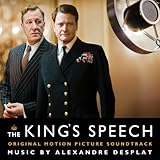
The King's Speech ReviewThe United Kingdom suffered one of its worst constitutional crises in living memory in the early 1930s. Following the death of King George V, his eldest son David ascended to the throne as King Edward VIII, but his insistence on marrying Wallis Simpson - a commoner, a divorcee, and worst of all an American - brought criticism from the political and religious leaders of the time. Forced with a choice between his kingdom and the woman he loved, Edward chose the latter, leaving his younger brother Bertie to reluctantly take over as King George VI. However, suddenly becoming the monarch of over a third of the world's population did not sit well with the new king, who was forced to deal with two issues at the beginning of his reign: firstly, the growing influence of German chancellor Adolf Hitler threatening peace in Europe, and secondly the King's own terrible stutter, which often rendered him literally speechless on important occasions. To counteract the latter, the King sought out the help of an unconventional Australian speech therapist named Lionel Logue. Director Tom Hooper's excellent film The King's Speech tells the story of the unconventional friendship of the pair; it stars Colin Firth as George VI, Geoffrey Rush as Logue, and Helena Bonham-Carter as Queen Elizabeth, Guy Pearce as Edward, and Michael Gambon as the ailing George V.
The music for The King's Speech is by Alexandre Desplat, and is his fifth score of 2010, following the thriller The Ghost Writer, the comedy Tamara Drewe, the political drama The Special Relationship and the first part of the fantastical Harry Potter and the Deathly Hallows. Despite having tackled five different genres in 2010 alone, Desplat is apparently becoming the go-to-guy when it comes to writing music for the British monarchy and British political life; having already written the critically acclaimed score for The Queen in 2006, he is now turning his attention to the life of her father. Clearly, should films be made of the lives of Edward VII and Queen Victoria, Desplat will be your man.
However, whereas The Queen dressed up the current British monarchy with contemporary rhythmic ideas more suited to depictions of modern life, Desplat treats the pre-WWII royals with a much more classical flavor. Written for a medium-sized orchestra with emphasis on strings, piano and the usual light woodwinds, The King's Speech is a delightful, occasionally quite whimsical score, in much the same vein as recent works such as Cheri and Coco Avant Chanel. Long-time listeners will be pleased to learn that there is nary a waltz in sight in The King's Speech, but the effortless sense of classicism, crystal clear orchestrations, precise tempos and charming warmth is still there in spades.
Desplat's elegant main theme, as heard in "The King's Speech", "The Royal Household" and at the end of "Fear and Suspicion", is lush and florid but just a little light-hearted. It's full of movement and grace, with a pretty piano line, sprightly pizzicato accompaniments, and occasional moments for effervescent chimes, and captures perfectly the hustle and bustle of 1930s London and the occasionally irritating pomp and circumstance of real royal life without coming across as stuffy or overly-officious. Similarly, the music which accompanies the numerous scenes between the two unlikely friends, best heard in the opening "Bertie and Lionel", is a charming and warm string and piano piece with occasional accents for soft flutes and harps, a tender reflection of their unusual relationship, Lionel's decidedly unconventional but engaging personality, and the apparent absurdity of his therapeutic techniques, which of course work like a charm.
As the central plot of the film deals with the King and his speech impediment, parts of Desplat's score mirror this through the music. One of the score's recurring motifs (first heard in "The King's Speech", elaborated upon "My Kingdom My Rules", and which features prominently in "Memories of Childhood" and "Queen Elizabeth") is intentionally unresolved and cyclical, insinuating a similar lack of resolution in the King's voice. Bertie cannot get his words out, stuttering over the same syllable repeatedly, and the music follows suit, never quite managing to develop beyond a brief thematic presence: a solo piano chord with a string sustain over the top. It's not minimalism in the same way that Philip Glass repeats the same phrase over and over again, but it has the same intellectual ideas behind it, and illustrates the core issue of the film well without being blindingly obvious. This theme finally breaks out of its shell in the lovely "The Rehearsal", when the stammering motif and the main theme play in counterpoint to each other as the King and Lionel make the final preparations for his coronation in Westminster Abbey. The addition of flighty woodwind accents and a more lyrical piano line to the music makes this cue an album highlight, albeit a brief one.
Some darker string-led material features in "The King is Dead", "Memories of Childhood", "King George VI" and "The Threat of War", parts of which are a little reminiscent of the more choppy and dissonant material from his Harry Potter score, and which reminds us that the life of a monarch can be as tragic as anyone else's. The final two cues, "Speaking Unto Nations" and "Epilogue", do not feature any Desplat music, and instead are relatively straightforward performances of two Beethoven classical pieces, the Allegretto from the Seventh Symphony, and the Adagio from the Emperor Piano Concerto. Desplat and director Hooper apparently decided to score the finale with these two pieces as a reflection of their place in British public consciousness alongside the King's famous broadcast rallying the nation behind Prime Minister Winston Churchill against the forces of Nazi Germany.
Another interesting aspect of the score is its recording. In an interview with the Los Angeles Times Desplat revealed that his engineer, Peter Cobbin, located the original personalized microphones that were made for the royal family (replicas of which actually appear in the film) in a storeroom at Abbey Road in London, and used them in order to capture an authentically "old fashioned" sound during the recording session. Although the end result is a recording which, in parts, sounds a little distant (especially in the opening cue, "Lionel and Bertie"), one has to applaud the clever little ways Desplat and his team approach the score, and the lengths to which they go to make the music sound as appropriate as possible.
The score for The King's Speech has been roundly praised by many mainstream critics, and is likely to be a strong contender for an Oscar nomination when the names are read in 2011. It's not Desplat's best score of 2010 - that accolade remains firmly in the hands of Harry Potter - but it is an enjoyable little work which compares favorably with earlier scores such as The Luzhin Defence, Girl With a Pearl Earring, and the aforementioned The Queen, Cheri and Coco Avant Chanel. If you're not already a fan of Desplat's work in the genre, The King's Speech is not going to convert you, but his admirers will enjoy it immensely.The King's Speech Overview

Want to learn more information about The King's Speech?

>> Click Here to See All Customer Reviews & Ratings Now
Read More...